Indian Prime Minister Narendra Modi has made fresh concessions to student protesters in an attempt to head off a nationwide demonstration planned for Friday, but stopped short of dismissing his education minister, a key political ally.
In a video message late on Thursday night, Modi pledged to set up fast-track courts to ensure swift justice and harsher punishment for those who had leaked public examination papers. He also removed the top civil servant in the education ministry, transferring him to another department.
“I know a[n exam] paper leak is not a small issue,” Modi said. “For millions of students and parents it is deeply painful. That is why . . . we have taken several steps. Those guilty have been arrested and are in jail.”
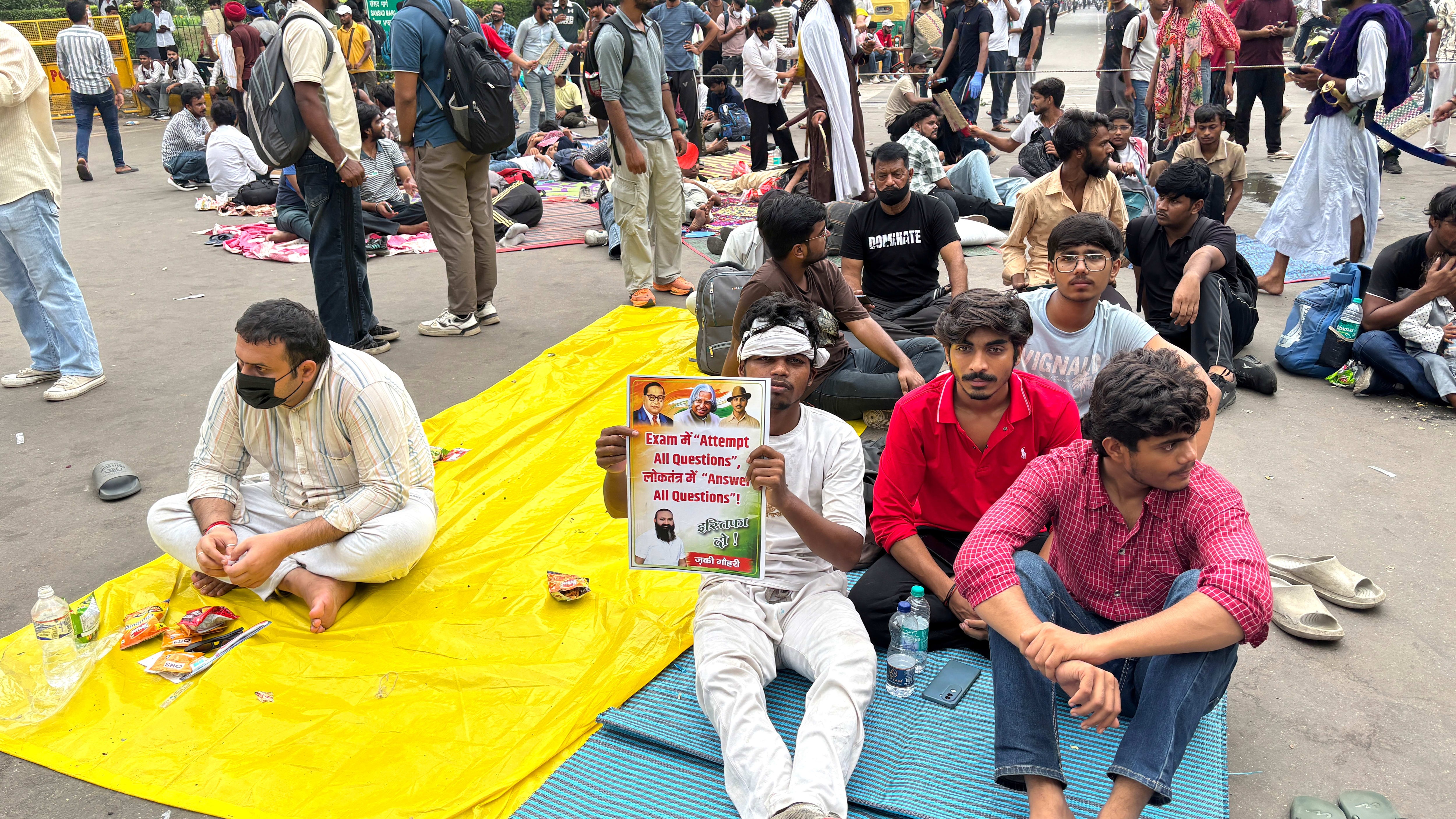
But students at Jantar Mantar, an 18th-century observatory which serves as the main protest site in central Delhi, vowed to continue their “Cockroach” movement demonstrations until education minister Dharmendra Pradhan, a key Modi ally, resigns.
“Modi had to shoot a video in selfie mode at 12am,” Cockroach Janta Party spokesperson Ashutosh Ranka told reporters at Jantar Mantar. “This shows the immense pressure on him.” As he spoke, protesters chanted: “Modi, shame, shame!”
Supporters used delivery apps to send food and supplies to the protest site, where volunteers were distributing water, tea, food and rehydration solutions to a few thousand demonstrators gathered in the humid heat of the monsoon season.
“Our supporters, parents, even those whose children are not here are sending us supplies, very thoughtfully keeping our needs in mind,” said Sparsh Chowdhury, a student volunteer managing food distribution at one stall. “We were feeling hot so I was pleasantly surprised when they sent us a whole lot of bamboo fans.”
Sonam Wangchuk, a prominent human rights activist whose support had galvanised protesters, ended a 26-day hunger strike late on Thursday after meeting government ministers and learning of the latest concessions, which included a promise not to prosecute students charged with non-violent offences after a big demonstration in New Delhi on Monday.
“Students are no longer staying silent,” the CJP posted on its X account. “This is not just a protest anymore — it’s a youth movement against a broken system.”
Abhijeet Dipke, a Boston University graduate who originally founded the CJP as an online satirical movement in May, vowed to continue his battle against the government despite falling ill. “Physically I’m still feeling weak due to fever but the fight must go on,” he wrote on X.
As in other countries which have experienced Gen Z protests, the student movement is posing a challenge to the government. However, Modi, who has been in power for 12 years, remains broadly popular and has won a string of regional elections in the past two years. Local financial markets have largely shrugged off the protests so far.
Delhi authorities shut 17 metro stations in central areas ahead of Friday’s protest and erected barricades across streets in government districts. Mobile users reported disruption to internet services near the protest site. Police tried to blame Pakistan, a familiar bogeyman in times of trouble, for stoking the student unrest.
Delhi police posted on X that “480 Pakistan-based social media handles involved in co-ordinated misinformation campaigns were identified and blocked”. The force appealed to students “to be wary of such foreign accounts spreading rumours to mislead the situation”.
Many offices in the capital closed for the day, with businesses uneasy about a possible repeat of Monday’s protest, when tens of thousands of protesting students were repeatedly tear-gassed and beaten with long wooden sticks by police.
The student protests began in May after a leak of a national medical exam question paper caused it to be cancelled after it was taken, causing anguish to an estimated 2.2mn youths who had spent years and in many cases considerable sums of money preparing for the test.
Recommended
This week, India’s main opposition parties came out in support of the protests. Rahul Gandhi, the main opposition leader, was detained for three hours by police on Tuesday night after he tried to stage a sit-in at Modi’s official residence.
Gandhi’s mother, Sonia, the chair of the Congress party, accused Modi of treating students as “enemies of the nation” in a newspaper article on Friday. She also accused the government of presiding over a decline in public education, forcing parents to spend large sums on private tuition.
“The acute desperation of our students is a direct consequence of the privatisation and commercialisation of education,” she wrote.