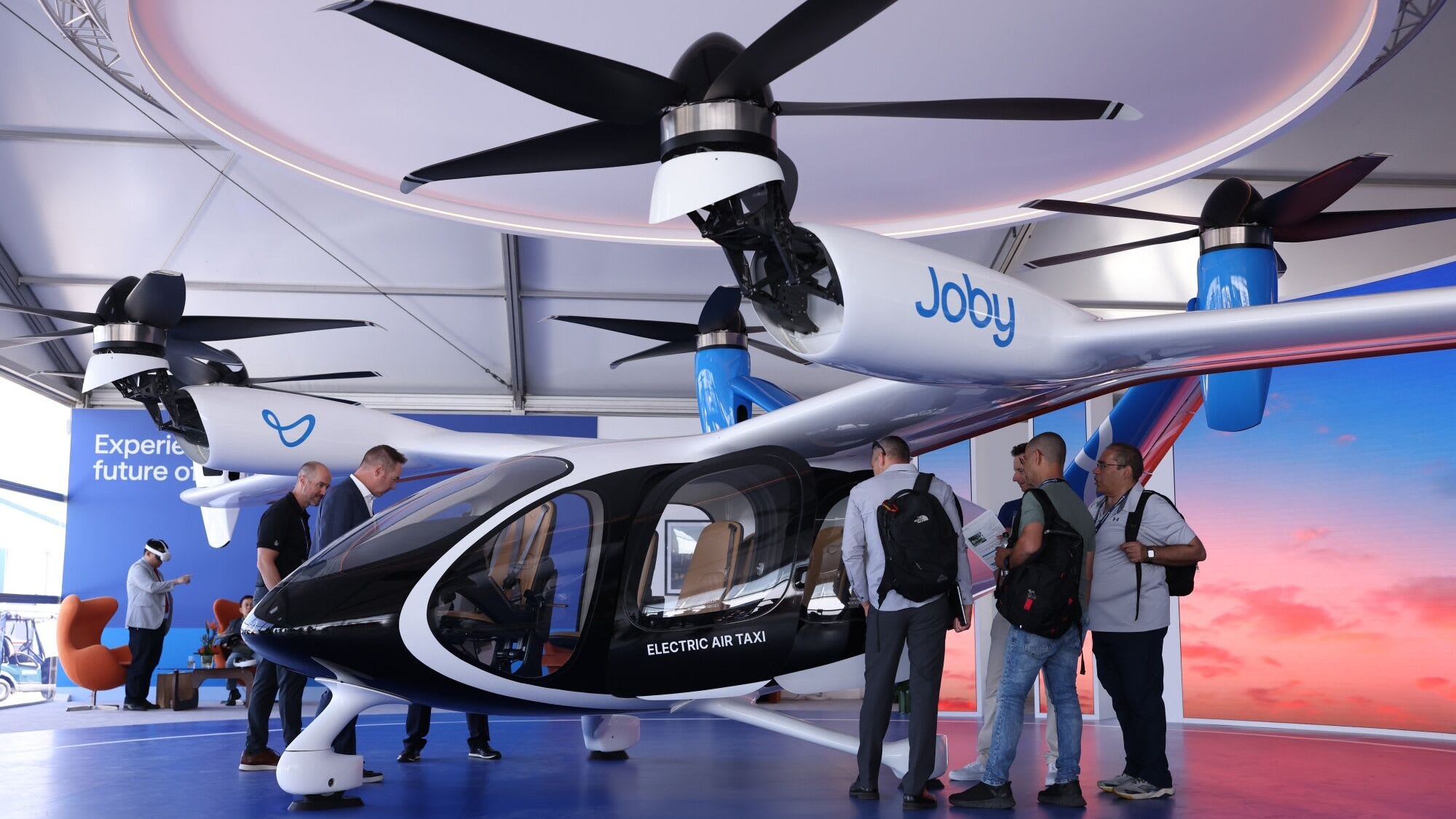
Air shows are noisy affairs with jets and helicopters flying overhead. But the line-up at Farnborough’s biennial gathering this week also featured its first hushed, electric, helicopter-like aircraft. Those with sensitive hearing will rejoice at the idea. Investors, too, can take heart at the progress.
Electric vertical take-off and landing (eVTOL) machines have come some way from the space-age air-taxi image that helped Archer Aviation, Joby Aviation and Vertical Aerospace to go public in the market boom of 2021. Now there are other, more practical uses that are nearer to realisation.
Through it all, the central premise hasn’t changed: eVTOLs can in theory do what helicopters do — and more besides since their muted noise allows more operations around built-up areas. They will be cheaper to make than their whirlybird cousins and cost less to run than notoriously difficult to maintain helicopters. Designs vary and an expensive race is under way to test, certify and then firm up orders so that profitability can at least be seen on the horizon.
Companies looking for alternative markets beyond as-yet uncertified small craft flying in as-yet unapproved streams across packed cities have naturally turned to the armed forces, which are big existing users of helicopters. Archer on Monday unveiled a helicopter strike drone in conjunction with US defence company Anduril, while Beta Technologies presented a cargo-carrying drone for military use.

Regional flying is another possibility: half of Europeans live within a 30-minute drive of a small airport, according to a 2023 McKinsey report. In the US, that rises to 90 per cent. It is a market that largely died out as planes got bigger, but there’s surely an allure to passengers in the idea of avoiding the bag drag of getting to, and through, big expensive hubs.
Hybrids, combining electric take-off and regular flight — when engines are at their most efficient and can also recharge batteries — are also a possibility. Canada’s Horizon expects to have a prototype of its six-seater by the end of the year. These models have the added advantage that they do not require as much new infrastructure, such as charging points, to be built.
Regulatory co-operation is giving investors some confidence. A US scheme allows some revenue-generating trials without full certification, such as using eVTOLs to deliver organs for transplant. UK authorities are working on how to safely increase low-level flying in busy airspace, and co-ordinating their certification efforts with counterparts elsewhere.
Developing this new technology has cost a lot of money. Archer and Joby have between them gone through more than $3bn since going public, with others adding to the total. Those two have enough, analysts estimate, to fund operations for several years yet. All are progressing at different rates. Still, some of these first movers, at least, may well be able to survive to see their technologies take off.