One thing to start: The US has relaunched its effort to water down antitrust rules, with the Department of Justice seeking to make merger reviews less burdensome as dealmaking booms across corporate America.
Welcome to Due Diligence, your briefing on dealmaking, private equity and corporate finance. This article is an on-site version of the newsletter. Premium subscribers can sign up here to get the newsletter delivered every Tuesday to Friday. Standard subscribers can upgrade to Premium here, or explore all FT newsletters. Get in touch with us anytime: Due.Diligence@ft.com
In today’s newsletter:
Stephen Schwarzman’s vibe shift
Nestlé’s water sale
The M&A boom of 2026
Wall Street’s new stock analyst
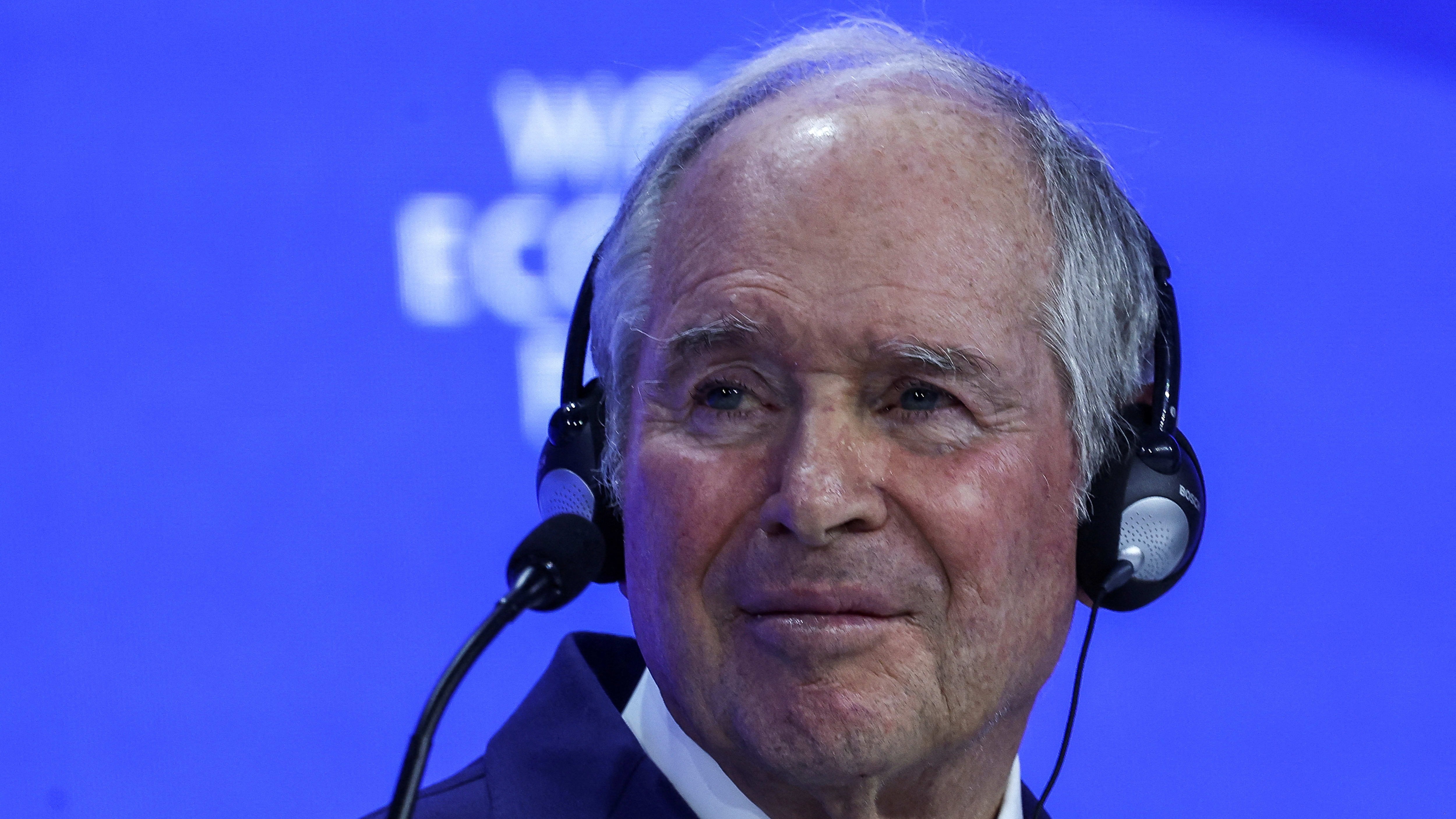
Stephen Schwarzman is resuming coverage of a stock near and dear to his heart: Blackstone Group.
Before he became a private capital titan, Schwarzman was one of the premier bankers in the 1980s. He never spent much time in the less lucrative world of sell-side research.
But Schwarzman’s frustration with public markets can often be revealed when he resorts to making market calls on Blackstone, the stock that is the foundation of his $40bn fortune.
For the decade after Blackstone went public in 2007, Schwarzman regularly complained about its stagnant share price.
Then Blackstone soared and his stock calls went quiet. Now, after Blackstone has shed about a quarter of its value over the past year, Schwarzman has initiated a new “buy” rating.
“Our stock is on sale today,” Schwarzman said on an earnings call Thursday.
Shares in Blackstone and its rivals have been pummelled by fears of rising distress in private markets, redemptions in many large private credit funds and tougher times in institutional fundraising.
It has been humbling for private capital titans, who until recently relentlessly took market share from investment banks including Goldman Sachs and Morgan Stanley that are again ascendant on public markets.
But Blackstone reported stronger than forecast second-quarter earnings that showed the $1.4tn in assets group can continue to grow in unsettled markets.
Jonathan Gray, president of Blackstone, told the FT redemptions at its flagship private credit fund had slowed after a surge in customers seeking to pull their money earlier this year.
It’s a good sign for the Blackstone Private Credit Fund, or Bcred, which has $45bn in net assets. But the fund raised just $1bn in new equity in the three months ended June 30, a drop of about 70 per cent from this time last year.
Blackstone is a diversified firm and many arms of Schwarzman’s empire are firing well.
Infrastructure investments, buoyed by enormous AI-related digital and energy spending, are a standout. Its hedge fund unit had its best quarter in a decade and its PE unit is taking long-held companies public.
Blackstone’s once-embattled retail property fund Breit also attracted $1.2bn in new assets and charged hefty performance fees.
Still, all is not copacetic. Many of Blackstone’s institutional PE and property funds have reported middling returns. And DD was caught off guard by Schwarzman stock calls, after he spent much of the 2010s complaining.
In 2017 he lamented that his group traded at a low valuation despite “faster revenue and earnings growth [than the broader market] . . . Go figure. I don’t think they teach that in Graham and Dodd . . . I’ve been racking my brain to make sense of this.”
His “buy” was prescient. Blackstone soon soared in value as it simplified its finances and attracted index and mutual fund investors.
Now, the pitch is different. Even after its plunge, the group only trades at a modest discount to the S&P 500.
Schwarzman said the company was a cheap way to play the AI boom, where it has invested hundreds of billions of dollars across data centres, power networks and machinery.
Blackstone “represents one of the most inexpensive ways to participate in this extraordinary megatrend”, said Schwarzman, referring to AI.
Nestlé mines private equity for an aquifer of cash
Even the fizziest glass of Perrier will lose its sparkle if left out for too long.
A similar dynamic impacted the Swiss consumer giant Nestlé’s effort to sell a stake in its European water business to a private equity firm.
On Thursday the KitKat and Nespresso maker announced it would sell a 50 per cent stake in the business that also includes San Pellegrino and Acqua Panna — now called Peranel — to the private equity firm Platinum Equity at a €4.9bn valuation, confirming a scoop from the FT’s Madeleine Speed and DD’s Ivan Levingston.
Shares in the company suffered their biggest drop since 2020 on Thursday after sales disappointed and profit margins were squeezed by high coffee and cocoa prices.
That slightly overshadowed the conclusion to the water auction process, which was anything but short.
Nestlé first indicated it would offload the brands in 2024, and in 2025 it separated the division from the rest of the company. By the time a formal sales auction was progressing, the deal had been well telegraphed.
The sale has been complicated by legal controversies, including raids earlier this year by French authorities at two of its bottling sites as part of a fraud investigation.
In 2024, the company was embroiled in a water purity scandal in France after a media investigation found a third of mineral water sold in the country had been illegally treated. Nestlé admitted to using prohibited treatment methods. Last year, the water business accounted for about 3.5 per cent of its group sales.
Platinum Equity, led by billionaire founder Tom Gores, emerged as the sole bidder after rival groups, including KKR, CD&R and PAI Partners, exited the auction for the business.
While the deal proved years in the making and ultimately came down to a single bidder, it may give some confidence to other companies considering carving out non-core divisions to sell to PE. That trade still seems to be bubbling along.
Dealmaking reaches new heights, says Goldman
Despite persistent inflation, war and other geopolitical uncertainty, it’s been a fantastic year for dealmaking. In the first half of 2026 deal volumes were up 48 per cent year over year, according to Goldman Sachs, and surpassed the all-time high set in 2021.
Goldman’s investment bankers seized the opportunity, advising on $1tn of deals this year through early June, a record for the fastest a bank has hit the $1tn mark.
A June survey conducted by Goldman of about 500 of its corporate and financial sponsor clients found 44 per cent were bullish on the outlook for M&A.
Matt McClure, global co-head of investment banking at Goldman, told DD: “The financial performance remains very solid, you’ve got the desire to build scale in companies’ core businesses, you’ve got a conducive regulatory environment, and the AI infrastructure supercycle. If all these tailwinds continue, there’s a real case to be made that the second half of the year should continue the really strong momentum.”
McClure noted there is “pervasive uncertainty around the geopolitical landscape and therefore the macroeconomic backdrop”. But that has, at least so far this year, been overridden by strategic imperatives, Goldman noted.
A majority of clients surveyed by the bank said scale and strategic growth were the primary factors driving M&A. The convergence of AI and infrastructure is also a growing factor, as exemplified by the NextEra-Dominion mega-merger.
If the bullishness continues, DD expects we’ll see more massive deals on the scale of NextEra that have the potential to reshape entire industries.
Job moves
Macquarie has appointed its banking head, Greg Ward, as its new chief executive after Shemara Wikramanayake announced her retirement following eight years in the role.
Lazard has hired David Krap as co-head of European consumer, retail and leisure. He joins from JPMorgan Chase.
Simpson Thacher has hired Netanya Clixby as a derivatives partner in London. She joins from Sidley Austin.
Moelis has hired Megan Dwyer Agar as a managing director in capital markets in New York. She joins from Guggenheim Securities.
New York City mayor Zohran Mamdani has appointed former Federal Trade Commission chair Lina Khan as chair of the city’s Economic Development Corporation.
Smart reads
Five-star The bar in Mayfair’s Connaught hotel is said to be the best in the world. FT Alphaville’s Bryce Elder checked it out for himself and largely reached the same conclusion, describing its Bloody Mary as “fluid mechanics in miniature”.
High-frequency posting Wall Street is on edge over whether to pay $100,000 a month for faster access to Donald Trump’s Truth Social posts, the FT reports, amid doubts about whether it’s worth the cost and fears that it could be a legal minefield.
Talent wars China’s AI ecosystem is exerting a growing pull on the country’s entrepreneurs and researchers, and not simply because the US is pushing them away. “China has become more magnetic,” Zijing Wu writes for the FT.
News round-up
Hedge funds grow at fastest rate in history as AI boom lifts markets (FT)
Jes Staley testifies on Capitol Hill over ties to Jeffrey Epstein (FT)
BNP Paribas profits surge by a third after trading boom (FT)
Dangote secures record $2.5bn investment to expand Lagos refinery (FT)
Stripe in talks to buy buzzy AI-model marketplace OpenRouter (WSJ)
Due Diligence is written by Arash Massoudi, Ivan Levingston, Ortenca Aliaj, Alexandra Heal, Robert Smith and Aaron Kirchfeld in London, James Fontanella-Khan, Sujeet Indap, Eric Platt, Antoine Gara, Amelia Pollard, Kaye Wiggins, Oliver Barnes and Julia Rock in New York, George Hammond and Tabby Kinder in San Francisco and Arjun Neil Alim in Hong Kong. Please send feedback to due.diligence@ft.com