Russian online retail group Wildberries pitched President Vladimir Putin that it could be more than just the country’s answer to Amazon. It could also challenge the US-led payment system around the world.
But after Ukrainian strikes hit five of the company’s warehouses in the past week, Wildberries has instead emerged as yet another weak spot in the Russian president’s war economy.
The attacks are part of a new Ukrainian campaign using largely homegrown advances in long-range drone technology to bring the impact of Putin’s invasion, now in its fifth year, home to ordinary Russians.
Ukrainian strikes have damaged Russian refineries in the heart of Moscow and as far away as Siberia, forcing one of the world’s largest energy producers to introduce rationing at the pump and import fuel.
Now, the attacks on Russia’s ecommerce sector are threatening to upend one of the country’s largest companies, which reported turnover of Rbs6.1tn ($78bn) last year and pitched Putin on an audacious global expansion in 2024.
Wildberries is a mass-market platform aimed at Putin’s core electorate: lower-income Russians living outside Moscow and St Petersburg. Its network of collection points extends into small towns and villages, where they have become some of the main hubs of local life.
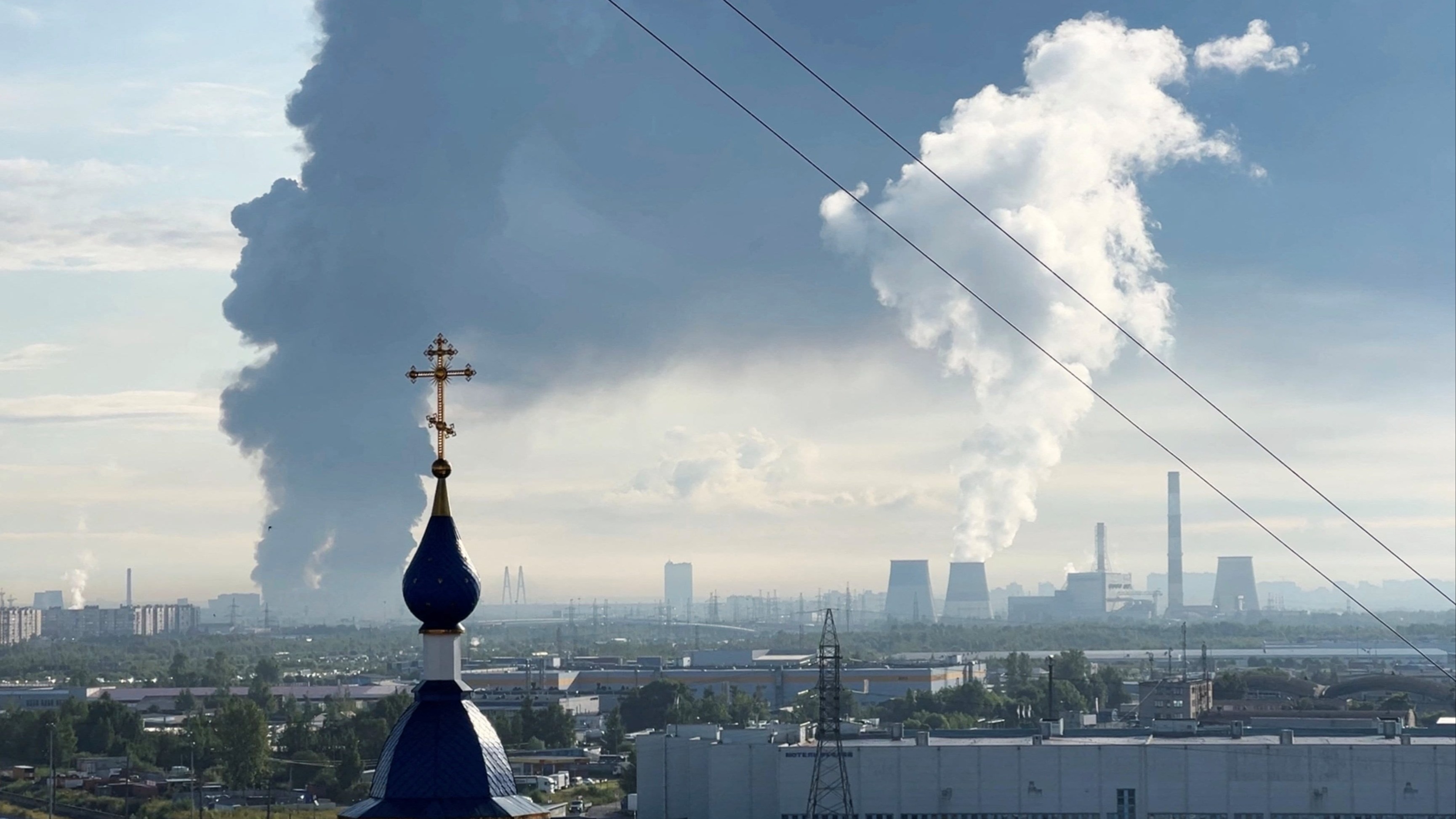
The strikes, which began last Saturday, have killed at least nine people and reportedly destroyed several billion dollars’ worth of inventory in fires that sent enormous plumes of black smoke billowing over cities in five Russian regions.
In the latest attack, Ukrainian drones struck a Wildberries facility in the Leningrad region near St Petersburg on Friday morning, sparking a massive blaze. The regional governor, Alexander Drozdenko, confirmed the attack and said that three people were injured.
Alexander Kolyandr, a director at Eurasia Group, said the economic impact would go beyond the lost inventories. ‘‘The loss of the goods will put thousands of traders out of business, resulting in unpaid taxes, defaulted loans and the like,’’ he said, adding that the strikes would deprive the state of tens of billions of roubles in taxes from a major taxpayer.
Ukraine has justified the attacks as retaliation for the Russian strikes on the warehouses of Nova Poshta, Ukraine’s private postal service.
Volodymyr Zelenskyy, Ukraine’s president, said Wildberries’ logistics network had been used to supply the Russian military with “drone components, navigation equipment and other gear”.
Though Dmitry Peskov, Putin’s spokesperson, denied this, sellers on Wildberries’ platform offer goods that can be used to make combat drones or as basic supplies for soldiers at the front, such as body armour and helmets.
The goods, many of which are imported from China and fall under western dual-use provisions, are popular among grassroots supporters of the war who crowdfund to equip Russian troops and build rudimentary drones as part of the “people’s military-industrial complex”.
The vast majority of the goods sold on Wildberries, which built its reputation as an online clothing retailer targeting women, have no military use.
The first four strikes destroyed about 444,000 square metres, or 8 per cent of Wildberries’ storage space, according to Russian newspaper Kommersant. Rebuilding the warehouses could cost the company about Rbs36bn ($460mn), it reported.
Many small businesses that sell their goods on Wildberries, which controls nearly half of Russia’s ecommerce market, have lost their stock in the strikes.
Russia’s edition of Forbes reported that the first strike, on warehouses in Elektrostal near Moscow and Kotovsk in the south, alone could have destroyed between Rbs150bn and Rbs235bn of inventory — a sum analogous to Wildberries’ Rbs175bn net profit in 2025.
Wildberries’ sellers posted emotional videos on Instagram saying their businesses had been wiped out overnight.
“Right now, 4,000 of my fur coats, worth more than Rbs20mn, are burning in the warehouse. What can I do to help myself? . . . Nothing,” reads the caption over the video of a seller called Tatiana Mikhaleva, as she stands by the roadside with a column of smoke rising behind her.
One founder of a cosmetics brand said she had lost Rbs1mn in the strikes. “I can’t calm down. I’m in shock. Every entrepreneur is in shock. I have no strength left,” Svetlana Dodo posted on Instagram. “We only found out from the news that if something blows up the warehouse, they won’t reimburse us a fucking thing.’’
Recommended
Less than two weeks before the first strikes Wildberries had changed its terms, classifying drone attacks as force majeure and absolving itself of any obligation to compensate merchants for lost goods.
As public anger mounted, Tatiana Kim, Wildberries’ co-founder and chief executive, has said insurers are unwilling to cover damage from drone attacks but promised to compensate 88,000 of what she said were Wildberries’ “smallest and least protected” sellers.
The programme, according to Kim, will pay the sellers as if the destroyed goods were still being sold at the same pace and price as before the drone strikes.
But sellers in group chats on social media app Telegram complained the payments were only a small fraction of the worth of their destroyed inventory, according to exiled independent news site Agentstvo.
One seller wrote that Wildberries had paid him just Rbs37,000 after he lost Rbs1.5mn worth of goods in the Elektrostal fire.