In the mayoral empire presided over by Andy Burnham until just over a month ago, housing is dominating the race to become his successor.
All three main parties vying to win Thursday’s by-election in Greater Manchester — Labour, the Green Party and Reform — are focusing on the subject in a city known for its rapid proliferation of skyscrapers.
A decade on from his first mayoral campaign, in which Burnham riffed off the juxtaposition between a growing skyline and soaring homelessness, political anxiety over housing has only become more acute.
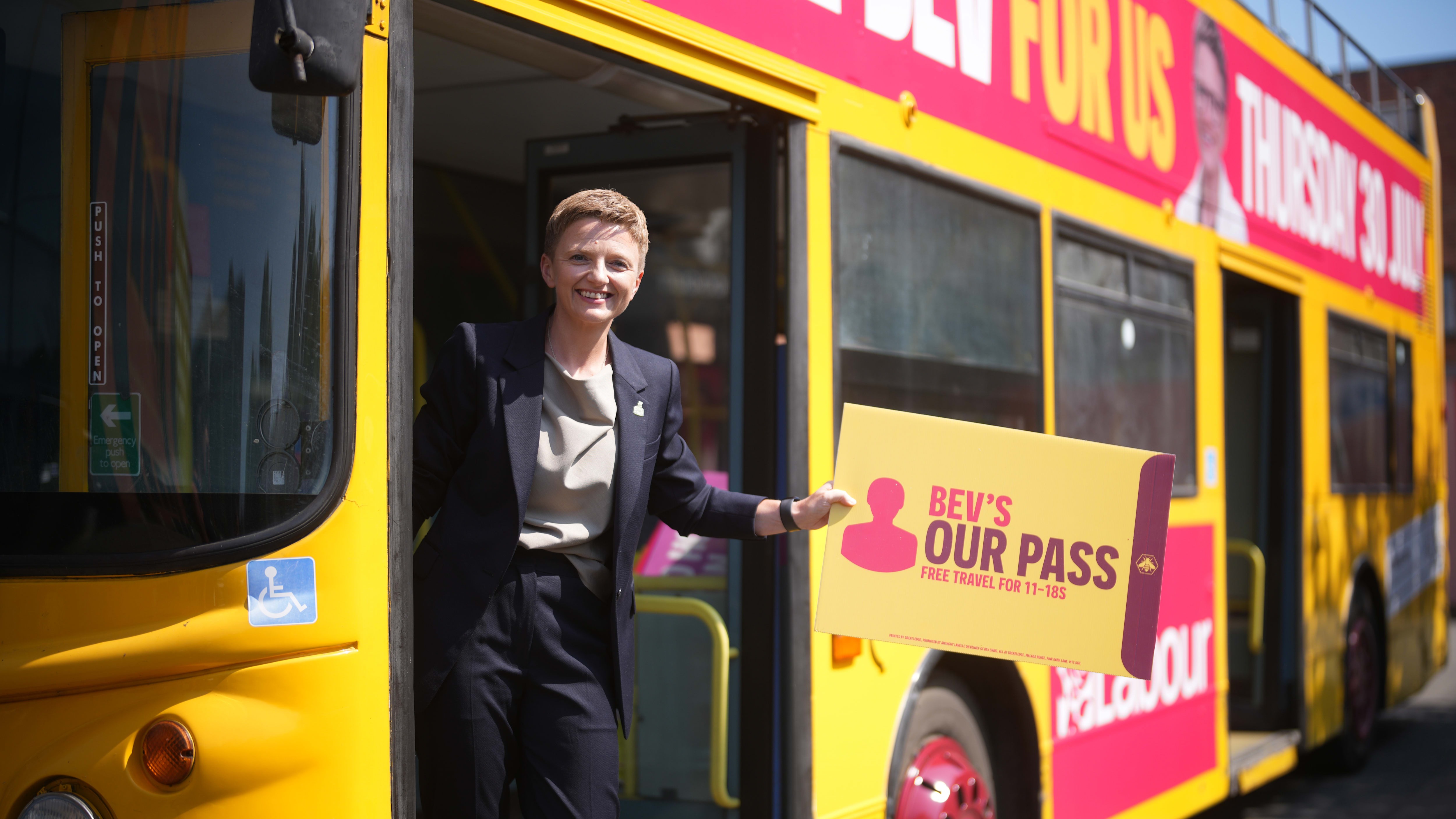
“Skyscrapers have become the totemic symbol of ‘are people feeling the benefit’,” Labour candidate Bev Craig, the frontrunner to replace Burnham, told the FT.
Recommended
As Manchester council leader since 2021, her planning department has presided over the city centre’s continued growth in recent years. But she acknowledges that the economic experience of outlying communities has felt different.
“The reality is that we wouldn’t have set the Good Growth Fund up in Greater Manchester if we believed that the economy was working for everyone,” said Craig of a £1bn pot of public finance, launched by Burnham last year, which intends to kick-start regeneration projects in every borough.
Manchester’s tower blocks are nonetheless still the most visible sign of a turnaround in the city centre economy, itself the product of a long-term effort by local leaders to return investor confidence to a place blighted by deindustrialisation 40 years ago.
The city is now growing faster than the national average after a successful pivot towards professional services and graduate retention. That growth has been mirrored, however, by a surge in family homelessness, as rents have risen and incomes have been squeezed.
So Labour’s opponents now have the symbolism of Manchester’s skyscrapers firmly in their sights.
The leftwing populist Green Party has already been on the march in Manchester this year, winning 17 seats in May in the council Craig currently leads.

It is seeking to highlight the towers, in which two-bed apartments are currently letting for as much as £9,000 a month, as a symbol of soaring rents and the use of taxpayer loans, including under Burnham, to pump-prime their development.
Candidate Geraldine Coggins said she would “take back Greater Manchester from big money”, accusing Labour, who have run the city for decades — and latterly its mayoralty — of “growth for growth’s sake” by presiding over “shiny towers and executive homes”.
“We know that’s not meeting the needs of people here,” she added.
Rightwing populists Reform UK are exploiting similar reservations.
“Whilst the city centre has prospered,” says candidate Sian Astley’s manifesto, “too many of the towns and communities of Greater Manchester have been left behind”.
Like the Greens, they point to the city region’s Housing Investment Fund, a devolved pot of cash provided by the Conservative government to the city’s leadership shortly before Burnham first took office.
That fund was intended to kick-start developer confidence by providing market-rate loans to private developers. Much of it was then used to fund residential city-centre tower blocks, in particular those built by the developer Renaker.
Reform’s manifesto promises to “expose luxury developer contracts”, accusing Burnham’s administration of giving money to “a select few”.
The pledge hints at recent legal controversy over the fund.
Developers Weis Group, which did not benefit from any loans, has twice taken the Greater Manchester Combined Authority to court, arguing the money was handed out unlawfully. The group has lost both times, most recently last month.
Labour’s Craig said that the skyscrapers remain a totemic issue 10 years after Burnham first ran — promising to use the housing fund for affordable homes, which he did not ultimately do — because inequality is a “generational” problem.
She is promising 50,000 new affordable homes, capped at housing benefit rates, by 2039, as well as the ability to prise more public land out of the government.
Craig also wants devolved powers to suspend the Margaret Thatcher-era Right to Buy scheme, which allows council tenants to buy their homes at a heavy discount.
Both her main opponents are also pointing to affordable housing as the answer.

Reform is concentrating on retrofitting existing social homes — Astley is a landlord who has built a career on doing up homes — while the Greens are, like Craig, promising tens of thousands of new affordable homes.
Coggins said the promise would cost £4bn, funded through borrowing and public financing such as the National Housing Bank.
The homes could be built without the use of greenfield, she insisted. It echoes a similar promise by Burnham in 2017, one that he ultimately had to break due to a lack of available brownfield land.
Coggins has also introduced the idea of rent controls into Greater Manchester politics for the first time, calling for the power to be devolved to mayors.
“Rents are going up and up,” she said, “and people are really struggling to make ends meet”.
Burnham has himself recently said rent controls are on the table nationally, acutely aware of the potency of housing as a political issue.
Nevertheless, he comfortably saw off similar attacks from Reform in the Makerfield by-election, 20 miles away from the city centre and on the edge of the mayoralty last month.
Professor Jon Tonge, political expert at the University of Liverpool, said that affordable housing was nonetheless “a vulnerability for Labour”.
But while Craig does not have the same communication skills as Burnham, he said, “the timing is such that this takes place during Burnham’s honeymoon”.
Two polls carried out so far, by YouGov and Find Out Now, show Labour winning comfortably on the second round of voting, with Reform and the Greens vying for second place.
“Whichever one you pick for second,” added Tonge, “it’s hard not to see Bev Craig as the new Andy Burnham.”