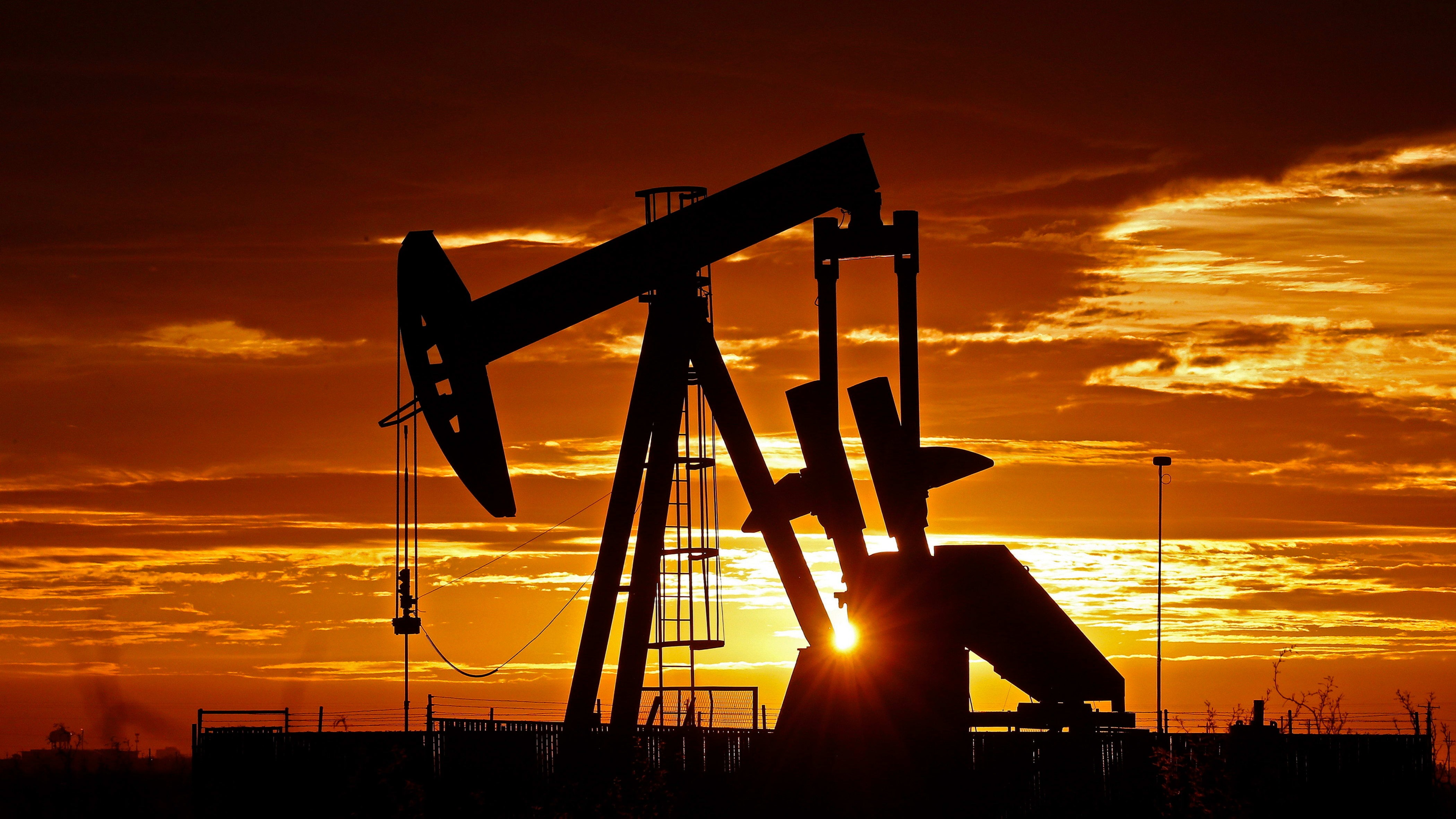
Oil prices fell back below $100 a barrel on Friday after crossing that mark for the first time since May the previous day as Donald Trump said he was weighing a “massive attack” on Iran and tensions escalated across the Middle East.
Brent crude, the international benchmark, was down 3.9 per cent at $96.75 in morning trading in Europe. It had risen as high as $102 on Thursday after attacks by Iran-backed Houthi militants in the Red Sea threatened to squeeze global supplies further and reignite a global inflation shock.
Oil had extended its blistering rebound this month after the Houthis said they had attacked two Saudi Arabian tankers following their move to impose a maritime blockade on the kingdom this week, adding to fears that the US and Iran are headed for a return to full-blown conflict.
The US president said in an interview with Axios on Thursday that he was “considering a massive attack. Bigger than ever before. I am close to making a decision. We are all set for it.”
Late on Thursday in Washington, the US military said it had completed a 13th consecutive night of air strikes against Iran.
Trump made escalatory threats against nuclear and civilian Iranian targets this week, saying that US forces would strike Iran’s nuclear facility buried deep under Kolang Gazla — known as Pickaxe Mountain. He added later that the US would destroy an Iranian bridge or power plant each time Tehran’s forces target a ship in the Strait of Hormuz.
Trump also on Thursday warned the Houthis and Iran that they would face “major military punishment” if the attacks continued, and later said “any and all damages done” to ships and cargo “will be paid for by Iranian Money that the United States has in its possession, and controls”.
Recommended
“This continued escalation is worrisome to markets,” said Bill Campbell, a portfolio manager at DoubleLine. “Oil is spiking at a time when things are much more precarious.”
“Last time around I was more confident there was an off-ramp for President Trump. This time around it feels much more serious,” he added.
The Nasdaq Composite dropped 2.2 per cent on Thursday as the latest shock from the oil market combined with disappointing earnings from Alphabet and Tesla to trigger a heavy sell-off in tech shares.
The S&P 500 was down 1.2 per cent, with Tesla’s shares tumbling 15 per cent and Alphabet losing 7 per cent.
Wall Street futures indicated a small gain for the S&P at Friday’s open.
The oil surge also hit bond markets as investors bet that big central banks will have to lift interest rates more quickly to contain the resulting inflation. The European Central Bank on Thursday warned “the full inflationary impact of the energy shock has yet to play out” as it kept borrowing costs on hold.
US 10-year borrowing costs climbed 0.05 percentage points to 4.71 per cent, an 18-month high, while German 10-year yields touched their highest level since 2011 at 3.21 per cent.
The targeting of Saudi Arabia’s ships raises the spectre of the Houthis closing the Bab al-Mandab Strait, which connects the Red Sea with the Gulf of Aden and the Indian Ocean.
It has become a vital route for the kingdom’s oil exports since Iran seized control of the Strait of Hormuz in the early days of the war. The attacks also risk unravelling a four-year ceasefire between the Houthis and Saudi Arabia.
Recommended
Rising US petrol prices, which topped $4 a gallon earlier this week, are likely to fuel voter frustration with Trump ahead of November’s midterm elections.
The Houthis are one of the most potent members of Iran’s so-called axis of resistance. But they have largely stayed out of the conflict, apart from firing several barrages of missiles and drones at Israel in March and early April.
There have been concerns that the Houthis will co-ordinate with Tehran to close Bab al-Mandab to pile pressure on energy markets and global trade.
Given the latest attacks, oil prices could exceed the high of $139 a barrel reached in 2022 in response to Russia’s invasion of Ukraine or even the $147 peak of 2008, said Helima Croft, head of global commodity strategy at RBC Capital Markets.
Additional reporting by William Sandlund in Hong Kong