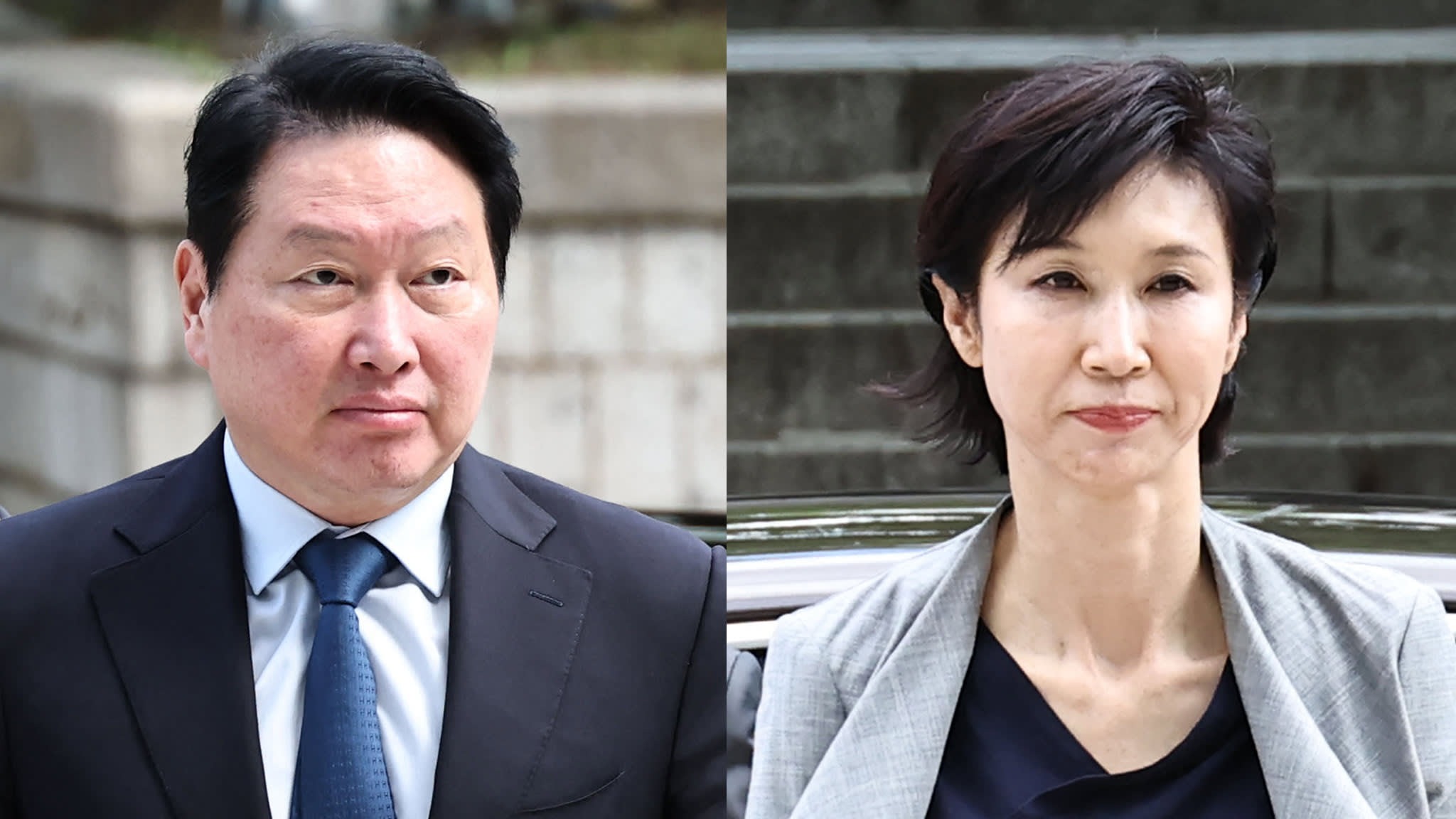
A South Korean court has ordered Chey Tae-won, the chair of AI chipmaker SK Hynix, to pay more than $640mn to his former wife, capping a decade-long legal battle billed in the country as the “divorce of the century”.
The Seoul High Court on Friday awarded Roh Soh-yeong, the daughter of a former South Korean president, Won944bn ($644mn) in a ruling that came more than 10 years after Chey first revealed an extramarital affair.
The figure is a significant increase from a lower-court ruling in 2022 that ordered Chey to pay Won66.5bn as a property settlement.
The Seoul High Court said its ruling took into account the large jump in the value of Chey’s shares as his fortune grew alongside the AI boom. SK Hynix’s valuation has soared about 2,500 per cent since he filed for divorce in 2017.
“SK’s share price has risen sharply during the court proceedings . . . we can’t say that Chairman Chey’s managerial contributions played no role in the increase,” the court said.
“We took the sharp rise in SK’s share price into account when determining the settlement in order to ensure a fair distribution of the couple’s marital assets.”
The award is the largest divorce payout ever in South Korea and represents roughly 12 per cent of Chey’s estimated $5.6bn fortune, according to the Bloomberg Billionaires Index.
The case has gripped the country, with local media dubbing it the “divorce of the century” because of the high-profile parties involved. SK Group, which owns SK Hynix, is the country’s second-largest conglomerate, and Roh is the daughter of Roh Tae-woo, South Korea’s first democratically elected president.
Chey’s global profile has also risen, with SK Hynix reporting record earnings as Nvidia’s leading supplier of high-bandwidth memory chips for AI processors.
He has frequently appeared alongside Nvidia’s chief executive Jensen Huang, including at a fried chicken restaurant in Seoul last month, underscoring SK Hynix’s central role in the global AI supply chain. He also rang the opening bell at SK Hynix’s Nasdaq listing this month.
Analysts said the ruling was unlikely to weaken Chey’s control of the conglomerate because he could finance the payout by selling his stake in non-core businesses such as silicon wafer maker SK Siltron or by taking out equity-backed loans.
The court allocated a third of the value of Chey’s shares in SK Inc, SK Group’s holding company, to Roh after she had requested nearly half. It said the payment could be made in cash, allowing Chey to retain his stake.
“There will be no major impact on Chey’s grip,” said Park Ju-geun, head of corporate research group Leaders Index, adding that he was unlikely to appeal “given all the controversy over the past decade”.
Chey’s lawyers said they would “decide whether to appeal after reviewing the ruling”. Roh’s lawyers declined to comment.
The 34-year marriage began to fall apart in public in 2015 when Chey published a three-page letter in a South Korean newspaper revealing an extramarital affair that produced a child.
Two years later, he sought divorce mediation, but the couple failed to agree on how to divide their assets, triggering years of litigation.
After a lower-court ruling was appealed, the Seoul High Court in 2024 increased the award to Won1.4tn, plus Won2bn in alimony, after finding that a Won30bn slush fund created by Roh Tae-woo had contributed to SK Group’s growth.
The Supreme Court later returned the case to the Seoul High Court, ruling that the former president’s illicit fund could not be treated as his daughter’s contribution when dividing the couple’s assets. It upheld the Won2bn alimony.
Chey, a nephew of SK Group’s founder, has argued that much of his wealth was inherited and should not be treated as marital property. He has led the conglomerate since 1998, expanding it from textiles and oil into alternative energy, semiconductors and electric vehicle batteries.
His empire spans more than 150 companies, including SK Hynix, the world’s second-largest memory-chip maker; SK Telecom, South Korea’s biggest wireless carrier; and energy group SK Innovation.