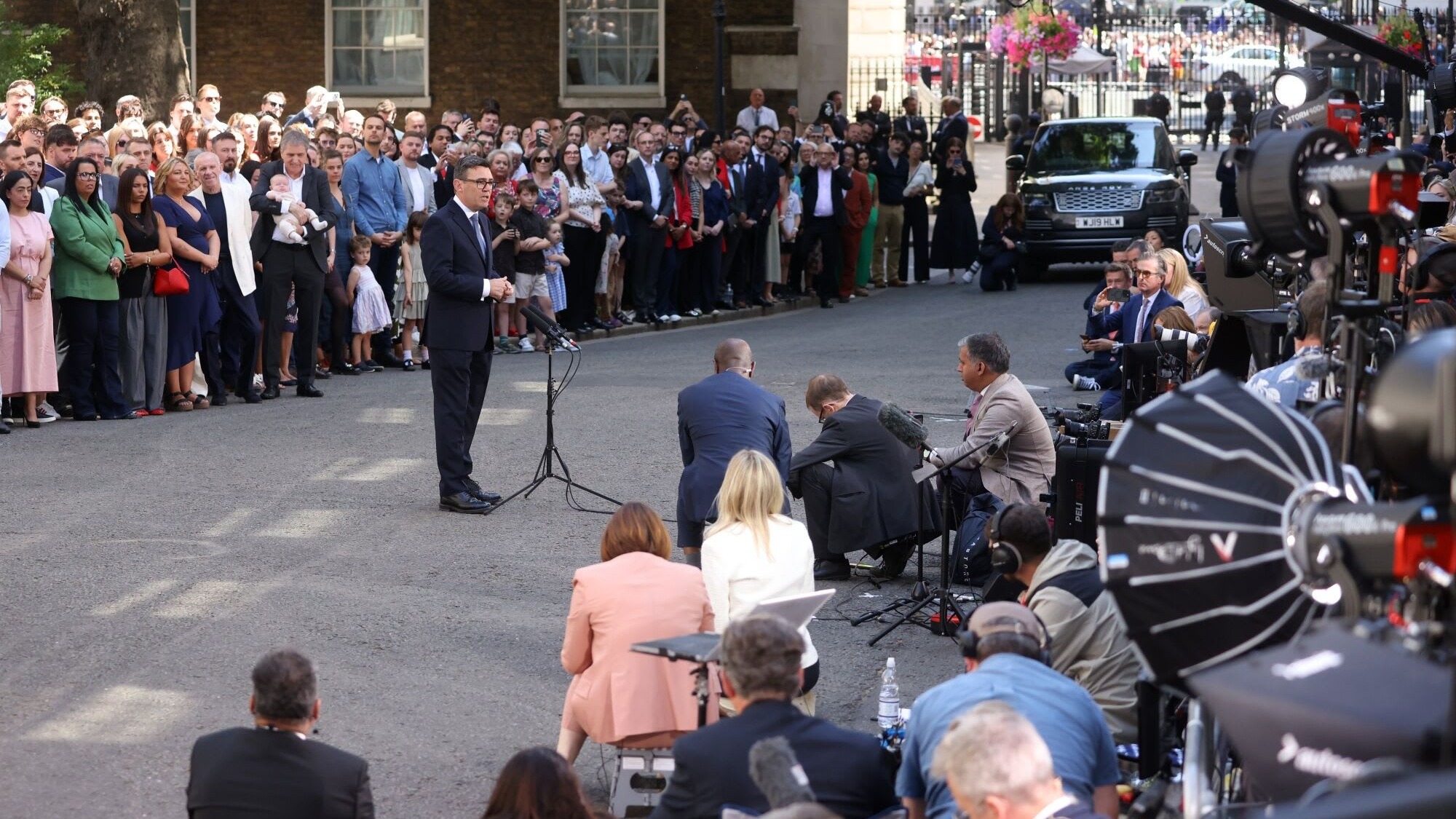
A busy first week for Britain’s new prime minister, who rushed out announcements to help alleviate the cost of living crisis faster than his critics could ask who might be taxed to pay for them.
Tellingly, what attracted the most attention was a seemingly offhand comment that voter frustration with the frozen £12,570 personal allowance threshold was “lodged in my mind”.
I’m not surprised that complaints about frozen tax thresholds were coming thick and fast on the doorsteps of his Makerfield constituency. Funnily enough, they are echoed in every postcode of the UK as the “cost of working crisis” sees us squeezed by a tax system in need of urgent reform.
While Andy Burnham is right to pick up on this problem, he may come to regret his comment. Despite furious backpedalling, it has created an expectation that this will be looked at in the autumn Budget.
With every year that passes, the “stealth tax” on workers’ wages is becoming more obvious — and it raises a hell of a lot of money. Fiscally dragging millions of people into paying more income tax while keeping the main rates of tax unchanged is on course to raise £55bn by the year 2030-31, according to OBR estimates. However, the full state pension is now a whisker below the £12,570 threshold, and the number of over-65s paying income tax has just smashed through the 10mn barrier.
Every £100 increase to the personal allowance would cost around £1bn a year, according to analysis by investment site AJ Bell. But raising this threshold wouldn’t just help low earners and pensioners — it would hand a small benefit to everyone in Britain earning up to £100,000.
It is the frozen thresholds higher up the income scale that are more likely to trouble FT readers. Any increase to the personal allowance would also widen the 60 per cent “tax trap” after £100,000, where it is tapered away (for every £2 of income above this level, you lose £1 of personal allowance).
Add on national insurance and student loan repayments and this increases to 71 per cent — a higher marginal tax rate than those earning millions! Presently, the rate drops back to 45 per cent when your income hits £125,140. But the higher the personal allowance, the broader this highly taxed slice will become, and the distorting effects on pay packets and the economy will increase.
For the sake of keeping as little as 29 pence in the pound, workers are turning down overtime, promotions or piling money into pensions where tax can be deferred. How the tax system interacts with the benefits system is another problem, with huge cliff edges for higher-earning parents claiming childcare and much lower-earning people who claim the carer’s allowance. In both cases, it can pay to work less, which is nuts.
According to tax expert Dan Neidle’s analysis of 2022-23 tax data, 32,000 taxpayers held their income back below £100,000, and 230,000 held it back below £50,000, the point where child benefit started to be clawed back (it has since been raised to £60,000). Three more years of fiscal drag will have caused these numbers to shoot up, and I would say it is the number one issue that FT readers talk to me about across the virtual doorstep of the online comments section.
So what, if anything, is Burnham likely to do about all of this? My best guess is nothing. Time is not on his side. I doubt an unelected prime minister will have the political appetite needed to reform the increasingly ridiculous way we tax income — though I would applaud him if he did.
Some argue that instead, he should cut employers’ national insurance contributions for workers under 25 to boost jobs and help the UK’s 1mn “Neets” — young people not in education, employment or training.
Many fear he is more likely to bring back the 50p top rate of income tax, although this would break a manifesto commitment and has been played down by Burnham’s team. If he did, fiscal drag would intensify the impact.
When Alistair Darling first announced this shortlived policy in 2009, the threshold for additional rate tax was £150,000. Allowing for inflation, that would be closer to £250,000 today. Now it has been reduced to £125,140, netting many more taxpayers. If John Healey, the new chancellor, is tempted, he should remember that back then, the 50p rate only raised a fraction of what was forecast as higher earners changed their behaviour.
More radical options include a land value tax, lowering the threshold on the forthcoming “mansion tax” or reforming inheritance tax. However, there was an unexpected intervention this week from Patriotic Millionaires, a group of over 100 UK-based millionaires including the people’s economist Gary Stevenson, who are calling on the new prime minister and chancellor to focus on taxing wealth and assets instead.
“We want you to tax us. We can afford it. We’re not talking about higher taxes on those who get up and go to work for their income every day, but on the very richest whose income is derived from the wealth they hold,” they said in an open letter calling for a 2 per cent levy on assets above £10mn and equalising capital gains tax with income tax. They argue these measures could raise £36bn a year, which tax experts think is optimistic.

Rachel Reeves partially closed the gap between capital gains and income taxes, but fully equalising them would not just impact millionaires, it would also hit less wealthy business owners, landlords and investors. Plus, if the 50p rate did return, that would create a new 50 per cent rate of CGT for higher earners.
“If capital gains tax is aligned to income tax at 50 per cent, this will be a significant push for entrepreneurs to leave the UK, and there will be a further deterrent for international talent to move here,” warns Nimesh Shah, chief executive of accounting firm Blick Rothenberg.
The need to address decades of bad tax policy becomes more pressing by the day, but the consequences of rushing out reforms mean that danger lurks whichever path Burnham chooses.
Claer Barrett is the FT’s consumer editor; claer.barrett@ft.com; Instagram @ClaerB