Good morning, happy Friday and welcome to FirstFT. In today’s newsletter:
Donald Trump hits 60 countries with new tariffs
Intel reports fastest revenue growth in 15 years
Far-right activist Laura Loomer meets Volodymyr Zelenskyy
Four road cycling routes near New York City
You can listen to today’s top news stories with the FT News Briefing podcast.
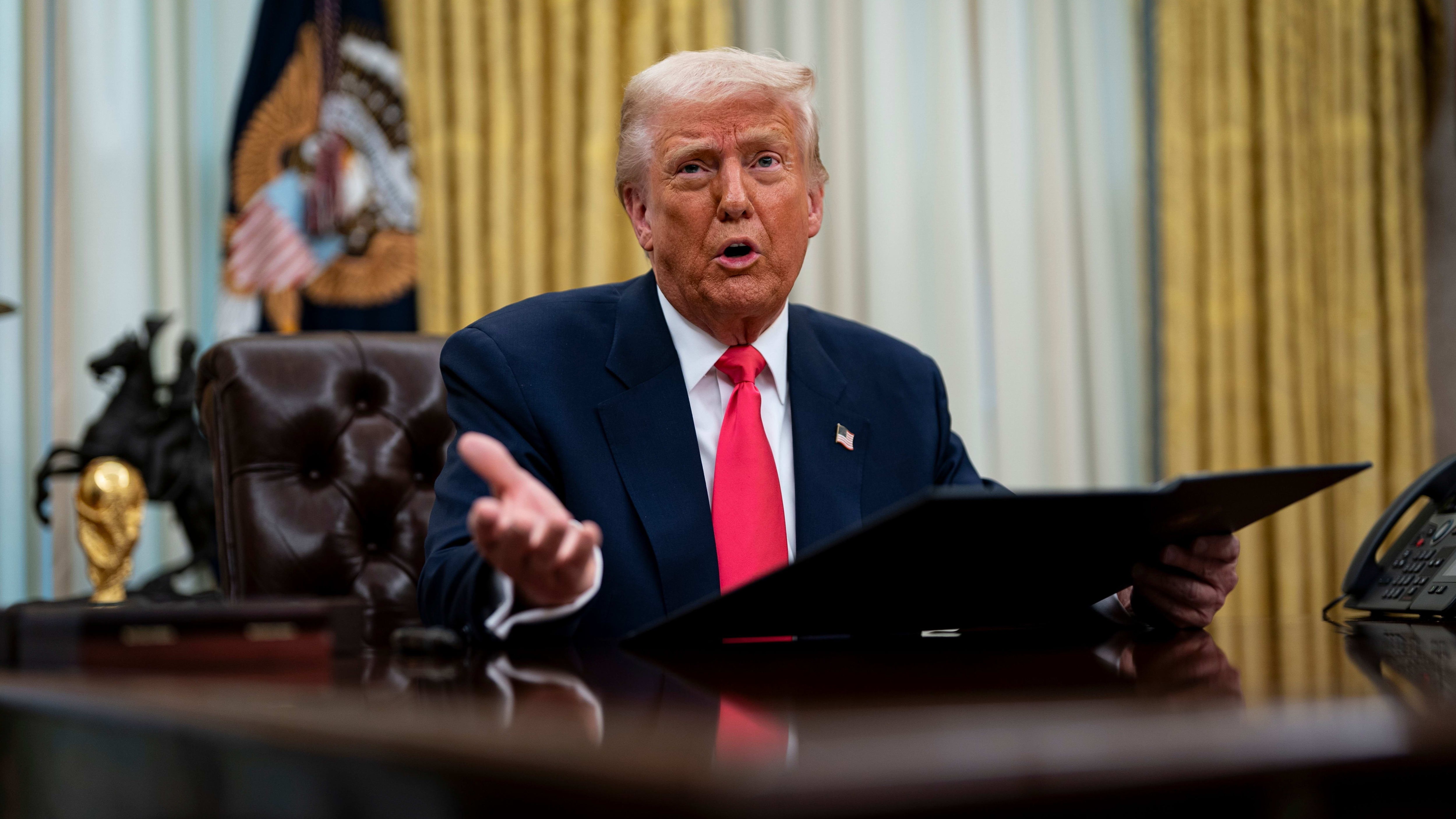
The US has hit 60 countries with new duties of at least 10 per cent as President Donald Trump looks to rebuild his tariff wall that was knocked down by the Supreme Court this year. Here’s what you need to know.
US justification for the move: The US accused the 60 economies hit with the new tariffs of failing to “impose and effectively enforce a prohibition on the importation of goods produced with forced labour”.
A senior US official added that the forced labour tariffs would “restore fairness in the global market for American workers” and prompt US trading partners to “join the United States in eliminating forced labour from global supply chains”.
In a notice on the US trade representative’s website it said that the new measures were based on Section 301 of the Trade Act of 1974, which allows the administration to avoid relying on emergency powers.
The new tariffs: The new charges replace the emergency 10 per cent global tariffs (under Section 122 of the Act) that were introduced to replace Trump’s “liberation day” charges that were ruled illegal by the Supreme Court in February but expire today. The Section 122 charges will range from 10 per cent to 12.5 per cent and take effect from today.
Which countries are being hit? The 60 countries include some of the US’s biggest trading partners such as Mexico, the EU and Japan. You can read a full list of the countries that have been targeted on the USTR’s website.
The duties include exemptions for oil, gas and fertiliser, along with some other goods that the US does not produce, and offer carve-outs for goods that are already hit by separate national security tariffs.
They will also include exemptions for goods traded under Trump’s 2020 deal with Canada and Mexico, providing a reprieve to two of America’s largest trading partners.
Reaction to the new measures: A range of countries have made comments this morning about the Trump administration’s latest tariffs.
Don Farrell, Australia’s trade minister, was one of the most outspoken. He said the imposition of a 12.5 per cent tariff on the country’s exports was “unjustified, inconsistent with our free trade agreement, and should be removed”.
China’s Ministry of Foreign Affairs said on Friday that “we oppose unilateral tariff measures of all kinds”. “Tariff wars and trade wars are in no one’s interest,” it said.
Singapore’s foreign minister Vivian Balakrishnan said there was “no technical or economic basis to impose tariffs upon us”.
A spokesperson for the European Commission said the latest tariffs aligned with what the EU and the US agreed upon in last year’s trade agreement.
Further reading
Ceremonial changing of the guard: Senior trade writer Alan Beattie wrote in a recent column that the new charges created “exciting” new opportunities for litigation.
Is Trump winning the tariff wars? Presenter of the FT’s The Economics Show podcast Soumaya Keynes tots up the scores.
Here’s what else we’re keeping tabs on today and over the weekend:
White House correspondents’ dinner: Trump will address journalists today at the rescheduled event.
Democratic candidate for Maine: Party members are expected to elect Troy Jackson tomorrow to fight the Maine Senate seat in November. His nomination will cap a tumultuous two weeks for the party in the state after Graham Platner was forced to abandon his bid in the face of sexual assault allegations. Read more on the ‘Johnny Cash of the Allagash’.
Five more top stories
1. Intel reported its fastest revenue growth in 15 years and added $2bn to its capital spending plans as demand for chips used in AI data centres accelerated its financial turnaround. Revenue rose 25 per cent year on year to $16.1bn in the June quarter and the chipmaker also raised its spending plans for this year to $20bn.
2. Donald Trump said he was weighing a “massive attack” on Iran in an interview with the Axios website. “I am close to making a decision,” he added. Brent crude, the international oil benchmark, continued to trade near $100 a barrel on Friday morning after jumping above that level yesterday.
3. Meta faces steeper borrowing costs as bond investors look for higher yields on a $12bn data-centre deal backed by the tech group, reflecting how markets are pricing in higher risks around AI financing. The project is offering yields of more than 7 per cent during initial discussions.
4. Far-right activist Laura Loomer yesterday met Volodymyr Zelenskyy in Kyiv. The meeting marked a 180-degree turn for Loomer who had previously told her millions of social media followers that Ukraine was corrupt, undeserving of US support and led by a “Jihadi apologist”.
Wildberries: Russia’s biggest online trading group’s warehouses have become the latest target of Ukrainian drones.
5. Investment firms are on track to launch a record number of exchange traded funds this year, with 1,000 debuts already, as they opt for a “spaghetti cannon” approach to try to find the latest stock market trends. The surge highlights how a wide range of providers are attempting to emulate the success of popular chip and bitcoin portfolios.
Pakistani politics

We’re also reading . . .
US-Saudi nuclear pact: An accord lacking “gold standard” safeguards on enrichment carries proliferation risks, argues the FT’s editorial board.
AI: More than a year after the DeepSeek shock, another “open” AI model from China has sent a severe tremor through Silicon Valley, writes Richard Waters.
Era of financial candyfloss: The value of real assets in the US is shrinking as financialisation soars, says Gillian Tett.
“Coolcations”: Demand for Scandinavian destinations has risen as traditional summer vacation hotspots in southern Europe endure extreme heat.
Chart of the day
South Korean companies flush with cash from the AI boom are making their biggest US investment push in years as they race to build up capabilities in the most advanced technology and avoid Trump’s tariffs.

Take a break from the news . . .
New York City can be less than optimal for bike riders but getting out of Gotham can be a joy. Here are four road-cycling routes for experienced cyclists that are best done on a road bike and can be completed within a few hours.
 Cycling over Marine Parkway Bridge with Manhattan in the distance © Will Pippin