More holidaymakers are opting to spend their summer vacations on so-called “coolcations” in the Nordic countries as traditional tourist hotspots in southern Europe endure successive waves of extreme heat as a result of climate change.
Booking platforms, airlines and tour operators have reported rising demand for cooler destinations, with travellers increasingly looking to spend their holidays in Norway, Sweden, Iceland, Denmark and Finland.
Online travel agent Trivago said UK bookings for July and August were up 55 per cent year on year for Norway, 57 per cent for Sweden and 29 per cent for Denmark, even as sunny Mediterranean countries remained the most popular holiday destinations for Britons.
“While we’re not yet at the point where the map of European summer travel is being redrawn, the edges are certainly shifting,” said Trivago chief executive Johannes Thomas.
He predicted that cooler destinations would continue “gaining ground” as climate irregularities “become the norm rather than the exception” in a warming world.
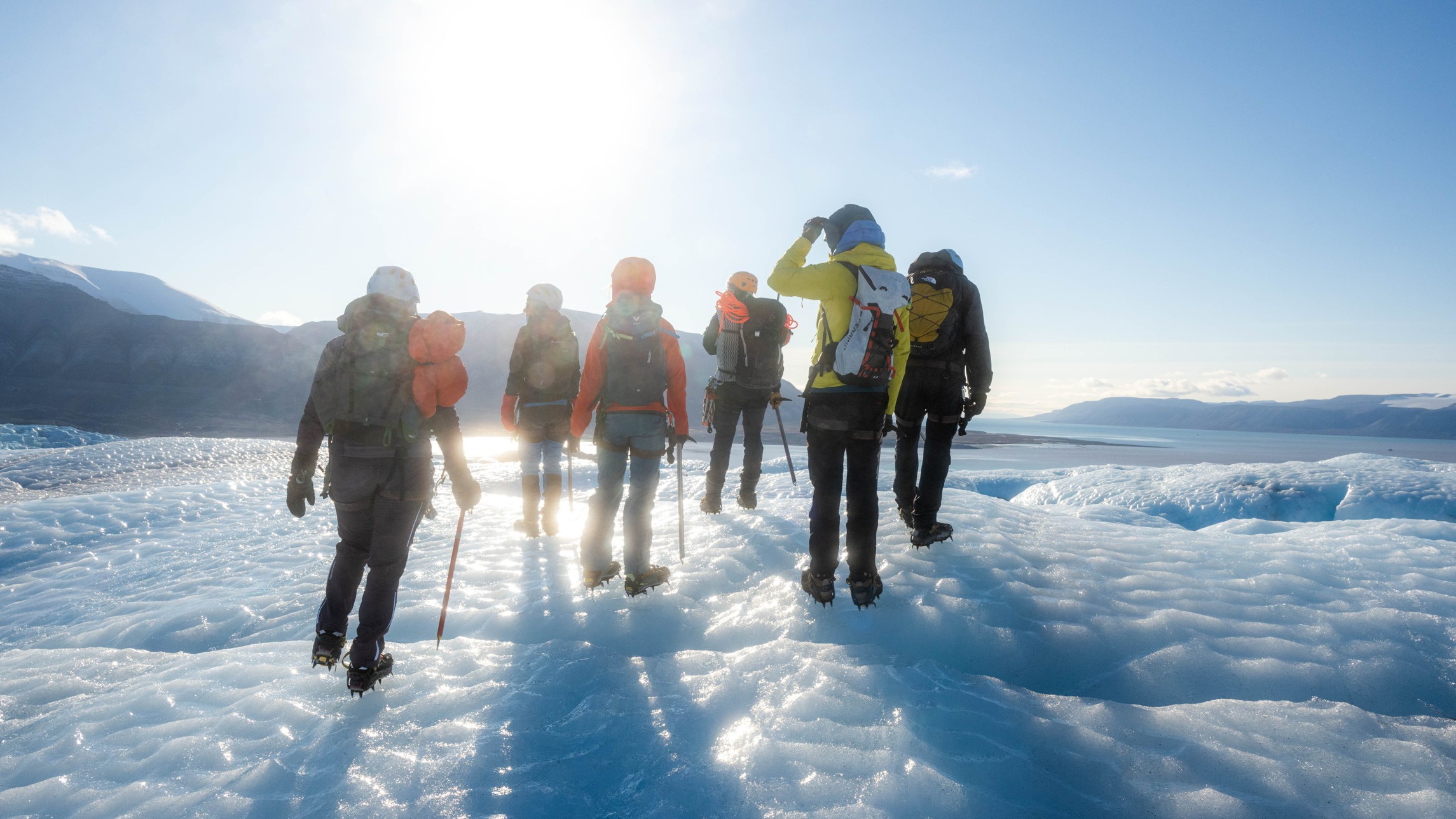
On the Norwegian archipelago of Svalbard, where temperatures this week are hovering between 7C and 12C, expedition tour operator Basecamp Explorer said heatwaves elsewhere in Europe had sparked fresh interest in visiting the Arctic.

“Some Americans have been really quick at booking flights. They call us and then they come from the US within one or two weeks,” said Birgitte Vegsund, a destination manager at Basecamp Explorer, which runs high-end remote wilderness trips at the Arctic island costing up to NOK100,000 ($10,360) for five days, not including flights.
The shift comes after another year of extreme heat across Europe. After heat records in May, the UK in June hit a new maximum temperature of 37.3C in Suffolk, nearly 2C above the previous monthly record, while France recorded its hottest June since measurements began around 80 years ago. Spain also set new national June temperature records, with parts of the country exceeding 45C.

Booking.com also saw rising global interest in summer breaks in Scandinavia. Recent heatwaves sparked a particular surge, with UK searches on Booking.com in the three weeks to July 4 up more than a third compared with last year for July and August summer breaks in Norwegian towns, including Tromsø and Reine, and the Swedish cities of Malmö and Lund.
UK tour operator Jet2 said that since launching its first route from London to the Norwegian city of Bergen in 2024, it had almost trebled capacity, while its Iceland programme had also seen “significant” growth.
The increased demand has spurred local tourist destinations into action. Eleven Deplar Farm, a 13-room off-grid lodge on Iceland’s remote Troll Peninsula, said occupancy between June and September was up nearly 30 per cent compared with 2024, while holidaymakers were also staying longer. “The ‘coolcation’ shift is very real for us, and it’s accelerating,” said Ian Wick, managing director at Eleven.
He added demand for renting the entire luxury lodge property had tripled from last year as affluent groups sought privacy and cooler weather.
Hurtigruten, one of Norway’s largest travel companies, said demand for trips to Norway and Svalbard had strengthened as travellers sought cooler, more active holidays in “stable and safe” regions.

The coastal cruise operator, which operates a major cruise stopping at 34 small harbours along the Norwegian coast, expects total guest numbers to rise more than 15 per cent in 2026 compared with last year, with bookings for 2027 currently more than 35 per cent ahead of the same point last year.
“In an unsettled world, the Nordic countries are very attractive,” Hedda Felin, Hurtigruten’s chief executive, told the FT. “The more unsettled people are, the more they will travel north.”
She added: “In the Nordics, you can breathe, you can do things, not just lie in the shade because it is too hot . . . You can have an active holiday and not be afraid of a heatwave.”

Some tourists are going further still; paying to sleep in a room kept below zero in the middle of summer.
At Sweden’s Icehotel in Jukkasjärvi in Swedish Lapland, 200km north of the Arctic Circle, chief executive Marie Herrey said demand was rising from travellers drawn by the possibility “to sleep and breathe properly”.
“To be able to sleep in a minus 5C room in the middle of summer seems to be a thing for people,” Herrey told the FT. “It’s a sleepcation and a coolcation at the same time,” she said.
Icehotel, which mainly attracts guests from the US and the UK, has 18 cold rooms and 74 warm cabins and rooms, where visitors can sleep on ice in summer before retreating to warm cabins, saunas and the midnight sun outside.

But some fear that Nordic countries risk repeating the mistakes of Europe’s overcrowded tourist hotspots.
Smaller destinations can lack the infrastructure to handle large influxes of visitors, from toilets to waste bins. “I am worried that we will increase the numbers, that it will become mass tourism and that we will destroy it for ourselves,” said Hurtigruten’s Felin.
Others say the shift should not be overstated as many consumers were still prioritising traditional summer destinations.
Lighthouse, which tracks hotel and flight demand, said recent heatwaves had triggered a wave of searches for holidays in the Nordics and higher-altitude destinations, but sunny destinations in southern Europe such as the Algarve in Portugal still dominated actual bookings for July and August.
“The recent heatwave has certainly prompted more conversations . . . but it’s not as simple as swapping Spain for Scandinavia,” said Jim Eastwood, UK chief executive at Travel Counsellors. “For most customers, the destination they’ve been looking forward to still comes first.”
Data visualisation by Steven Bernard
Where climate change meets business, markets and politics. Explore the FT’s coverage here.
Are you curious about the FT’s environmental sustainability commitments? Find out more about our science-based targets here