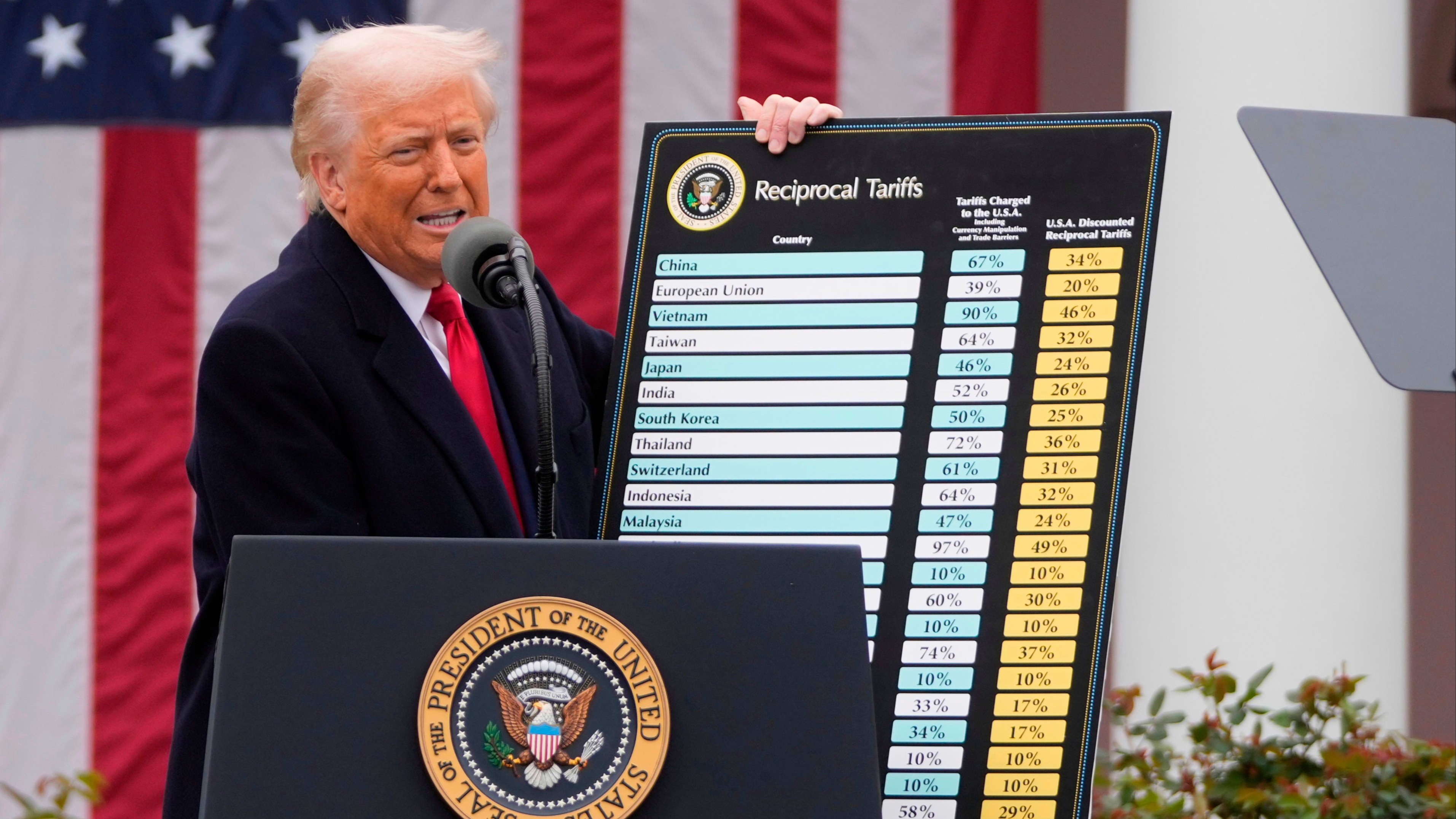
The US has hit 60 countries with new duties of at least 10 per cent as Donald Trump rebuilds the tariff wall that was knocked down by the Supreme Court earlier this year.
Washington imposed the levies on major trading partners on Friday just as Trump’s previous 10 per cent global tariffs expired, with the UK, Mexico, EU, Japan, Taiwan and South Korea facing rates ranging from 10 to 12.5 per cent.
The duties highlight how Trump is using new tools to keep his signature trade policy in place even after the top court ruled that the levies imposed after his “liberation day” event in April 2025 were illegal.
After the court struck them down, Washington imposed a global 10 per cent tariff regime, but the move was based on a law that only allowed them to be collected temporarily, and the levies had been due to expire on July 24.
The US trade representative said in a notice on its website that the new measures are based on Section 301 of the Trade Act of 1974, which allows the administration to avoid relying on emergency powers.
It accused the 60 economies hit with the tariffs of failing to “impose and effectively enforce a prohibition on the importation of goods produced with forced labour”.
“With his global tariffs expiring tonight, Trump is once again flipping through the statute books looking for any authority to keep them in place. Today’s forced labor justification is too convenient to be taken seriously,” said US representative Richard Neal, the top Democrat on the committee responsible for trade.

The administration’s move came after the president on Monday unveiled levies of 50 per cent on some Canadian goods and last week imposed a 25 per cent tariff on many Brazilian imports.
A senior US official said the forced labour tariffs would “restore fairness in the global market for American workers” and prompt US trading partners to “join the United States in eliminating forced labour from global supply chains”.
The duties will include exemptions for oil, gas and fertiliser, along with some other goods that the US does not produce, and offer carve-outs for goods that are already hit by separate national security tariffs.
They will also include exemptions for goods traded under Trump’s 2020 deal with Canada and Mexico, providing a reprieve to two of America’s largest trading partners.
The imposition of the new tariffs follows an investigation by the Trump administration into forced labour practices, part of its efforts to create other legal bases for levies similar to the president’s “liberation day” tariffs.
Recommended
Following the court’s ruling, the Trump administration has used other trade legislation to impose tariffs, including the national security laws used to hit steel and aluminium, and an obscure law used to impose duties on Canada earlier this week.
A spokesperson for the European Commission said the latest tariffs align with what the EU and the US agreed upon in last year’s trade agreement. The bloc agreed in 2025 to eliminate tariffs on American industrial goods and some agricultural products in return for the US dropping its levies on most EU goods to 15 per cent.
“It also provides positive momentum to continue the work on exploring further tariff exemptions and deepening co-operation,” the spokesperson added.
China’s Ministry of Foreign Affairs said on Friday that “we oppose unilateral tariff measures of all kinds”. “Tariff wars and trade wars are in no one’s interest,” it said.
Japan’s chief government spokesperson, Minoru Kihara, described the US imposition of fresh tariffs as “regrettable”.
Don Farrell, Australia’s trade minister, said the imposition of a 12.5 per cent tariff on the country’s exports was “unjustified, inconsistent with our free trade agreement, and should be removed”.
Singapore’s foreign minister Vivian Balakrishnan said there was “no technical or economic basis to impose tariffs upon us”.
Additional reporting by Barbara Moens in Brussels, Joe Leahy in Beijing, Leo Lewis in Tokyo, Nic Fildes in Sydney and Owen Walker in Singapore. Data visualisation by Alan Smith